
.png)

.png)
.png)
.png)


Do You Need a Morocco Guide for Your Trip?
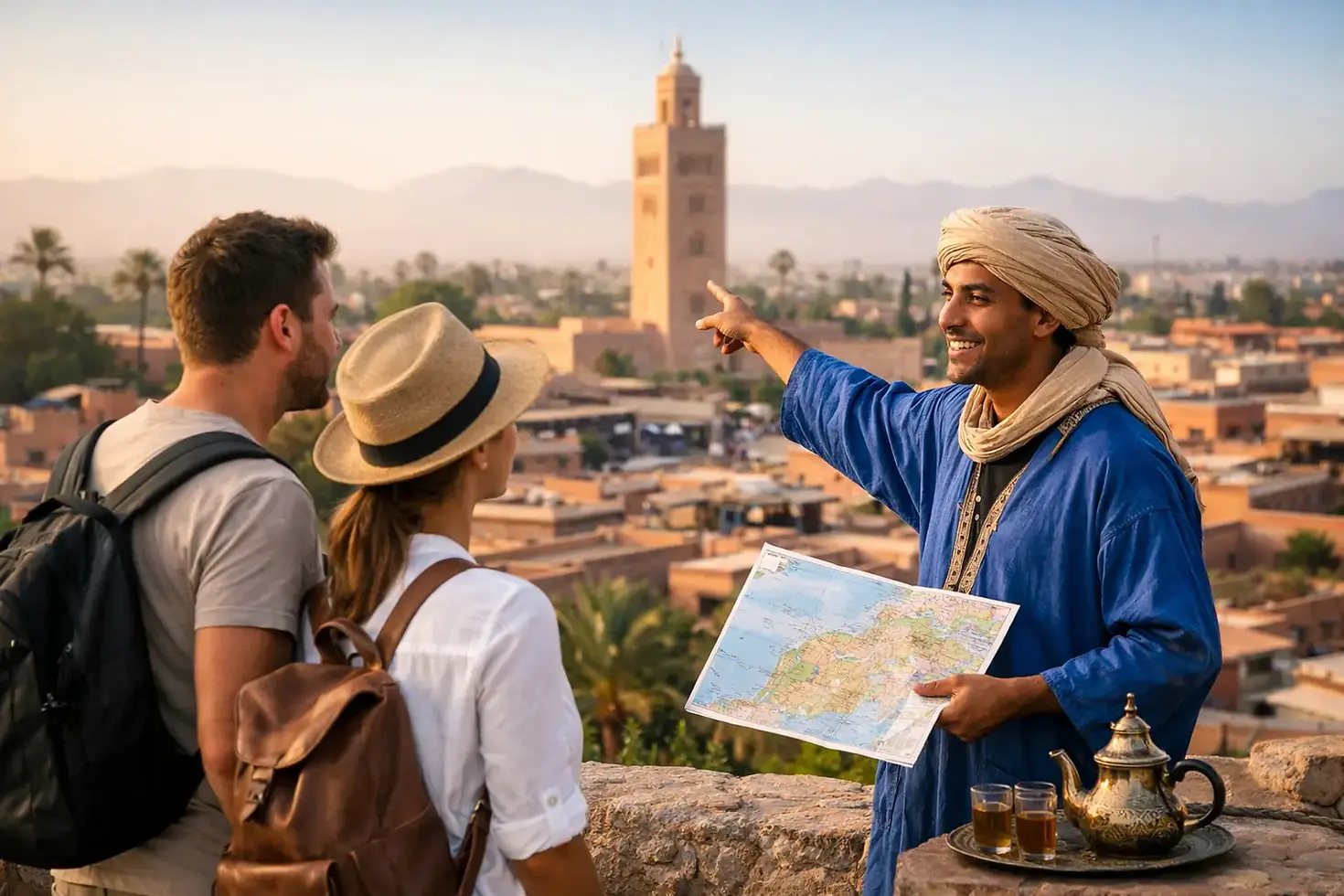
A morning in Marrakech can feel simple on paper: walk through the medina, find a good lunch, visit a few landmarks, then return to your riad. In practice, narrow lanes branch without warning, the best small workshops are easy to miss, and a short drive across town can take longer than expected. That is why travelers often ask, do you need a Morocco guide, before building an itinerary.
The honest answer is no, not for every day or every type of trip. Morocco can be a rewarding place to explore independently, particularly if you enjoy making your own discoveries and have time to move at a flexible pace. But a local guide can make a meaningful difference when your itinerary includes complex routes, mountain trails, the Sahara, or a limited number of days in the country.
The best choice is rarely all guided or all independent. For many couples, families, and groups of friends, a thoughtfully planned mix provides the most freedom and the least friction.
Do You Need a Morocco Guide? It Depends on Your Route
A guide is most useful where local knowledge solves a real travel problem. In Morocco’s major cities, that may mean navigating a historic medina efficiently, understanding what you are seeing, and avoiding the feeling that you are spending half the day checking directions. In the Atlas Mountains, it can mean choosing a trail that fits your ability, reading changing conditions, and arranging a smooth stay at a mountain lodge or refuge. In the Sahara, it is often about coordinating the long road journey, desert access, camp timing, and activities without guesswork.
If your trip is focused on a single city and you are comfortable using maps, booking restaurants, and allowing room for detours, you may not need a full-time guide. A private half-day city guide can be enough. You get context and orientation early in the trip, then spend the following day at your own pace.
The calculation changes when you want to connect Marrakech, the High Atlas, Ait Ben Haddou, the Dades Valley, and the Sahara in a few days. This is a beautiful route, but it is not a simple point-to-point journey. Distances are substantial, roads are varied, and the stops worth making are not always obvious from an itinerary map. A local driver-guide or a private tour team turns transportation days into part of the experience rather than a logistical hurdle.
A guide is not the same as a driver
This distinction matters when comparing options. A driver gets you from one place to another. A trained local guide adds interpretation, route knowledge, help with timing, and practical support during visits. On some trips, those roles are handled by different people. On others, especially private touring, one experienced driver-guide may support the journey between destinations while dedicated local guides lead specific city visits or treks.
Ask what is included before you book. Clarify who will meet you at each stop, whether the person accompanying you is licensed for guided visits, how much time is planned for sightseeing, and whether your itinerary allows for spontaneous stops. The right arrangement should fit the trip, not force your trip into a fixed format.
When Independent Travel Works Well
Traveling without a guide can be an excellent choice for travelers who prefer a slower, self-directed style. You might stay several nights in one riad, choose a neighborhood café on a whim, spend an afternoon browsing contemporary galleries, or return to a market stall that caught your attention the day before.
Independent travel tends to work best when you have three things: time, confidence with unfamiliar cities, and a simple route. A long weekend in Marrakech or a relaxed stay in Essaouira is very manageable for many visitors. Prearranged airport transfers and accommodations remove the largest arrival-day stresses, while a good local orientation can handle the rest.
It can also work well for travelers who want to keep costs down. A private guide is an added service, and not every activity needs one. Rather than booking a guide every day, invest in one high-value experience: a walking tour on your first morning, a food-focused visit, or a guided excursion beyond the city. Then leave open time for your own pace.
There are trade-offs. Independent travel requires more research and more patience when plans change. You may spend extra time finding an entrance, comparing transportation options, or deciding which experiences are genuinely worth your limited time. Some travelers enjoy that process. Others would rather arrive knowing the details have been handled.
Where Local Guidance Makes the Biggest Difference
Historic medinas and city experiences
A guide in Marrakech, Fes, or another historic city is not only there to prevent you from getting lost. The value is in the stories and details that are difficult to notice alone: how a traditional workshop operates, why particular materials are used in local crafts, which corners of the medina are best visited early, and how to move through busy areas with confidence.
For first-time visitors, a private guided walk early in the stay is often the sweet spot. It gives you an understanding of the city’s rhythm, then allows you to revisit the places that interested you most. Families may especially appreciate the easier pacing and the ability to shape the day around energy levels, food preferences, and breaks.
Atlas Mountain treks
For a trek around Toubkal or through smaller Atlas valleys, local guidance is strongly recommended. Trails can be uneven, weather changes quickly at elevation, and the right route depends on the season, the group’s experience, and how much climbing you want to do. A mountain guide also brings practical regional knowledge, from trail conditions to the best pace for acclimatization.
This does not mean every trek has to be intense. A well-designed mountain experience can be a gentle village walk, a scenic day hike, or a multi-day ascent for fit travelers. What matters is matching the route to the people in your group rather than choosing a trail only because it looks impressive online.
Sahara Desert journeys
The Sahara is where organized local support usually offers the clearest benefit. Reaching the dunes from Marrakech or Fes takes planning, and the quality of the experience depends on timing. You want enough daylight for scenic stops, a comfortable vehicle for the road, and an arrival that lets you enjoy the desert rather than rush through it.
A reliable local team can coordinate the route, desert transfer, camp, meals, and optional activities while accounting for your preferred level of comfort. A three-day Sahara journey can work well for a shorter vacation, though adding an extra night creates a less hurried rhythm. For families and private groups, that extra flexibility is often worth considering.
How to Choose the Right Level of Support
Start with your itinerary, not with a blanket assumption that a guide is either essential or unnecessary. Think about the number of destinations, your arrival and departure cities, the ages and interests of your group, and how much planning you want to take on while traveling.
A couple on a 10-day anniversary trip may want private transport, distinctive accommodations, city guides in selected places, and free afternoons for wandering. A group of friends booking a three-day desert tour may need a clear pickup point, comfortable transport, and an experienced driver-guide, but no additional guide time in Marrakech. A family with younger children may value one point of contact who can adjust the daily pace and avoid long, unnecessary waits.
It is also worth considering the kind of access you want. A good guide does not manufacture a scripted version of Morocco. They help create space for genuine experiences, whether that means meeting craftspeople, choosing a quiet lunch spot, taking a less crowded route through the mountains, or simply knowing when to pause.
Questions to Ask Before Booking a Guide
Before committing, ask how private the experience will be, how the guide is matched to your interests, and what language they speak. Request a realistic daily schedule rather than a long list of stops. The most satisfying itineraries leave room for traffic, photographs, a second cup of mint tea, and the unexpected moments that often become the most memorable.
You should also ask who handles transportation, accommodation coordination, and support if plans change. A guide can be excellent on foot but may not be the person managing a multi-day route. For complex travel, a local operator that coordinates the full journey can prevent gaps between hotels, drivers, activities, and guides.
Nomadik Morocco designs private journeys around exactly these choices, from guided city visits and Toubkal treks to desert routes that balance comfort, scenery, and time on the road. The goal is not to fill every hour. It is to make each part of the journey feel well considered.
A Morocco guide is most valuable when they give you more of the trip you came for: more confidence on the road, more understanding in a historic city, and more time to enjoy the mountains or desert without managing every detail yourself. Choose guidance where it adds depth, leave room for independent moments where you want them, and let the itinerary match your own travel style.


Comments