
.png)

.png)
.png)
.png)


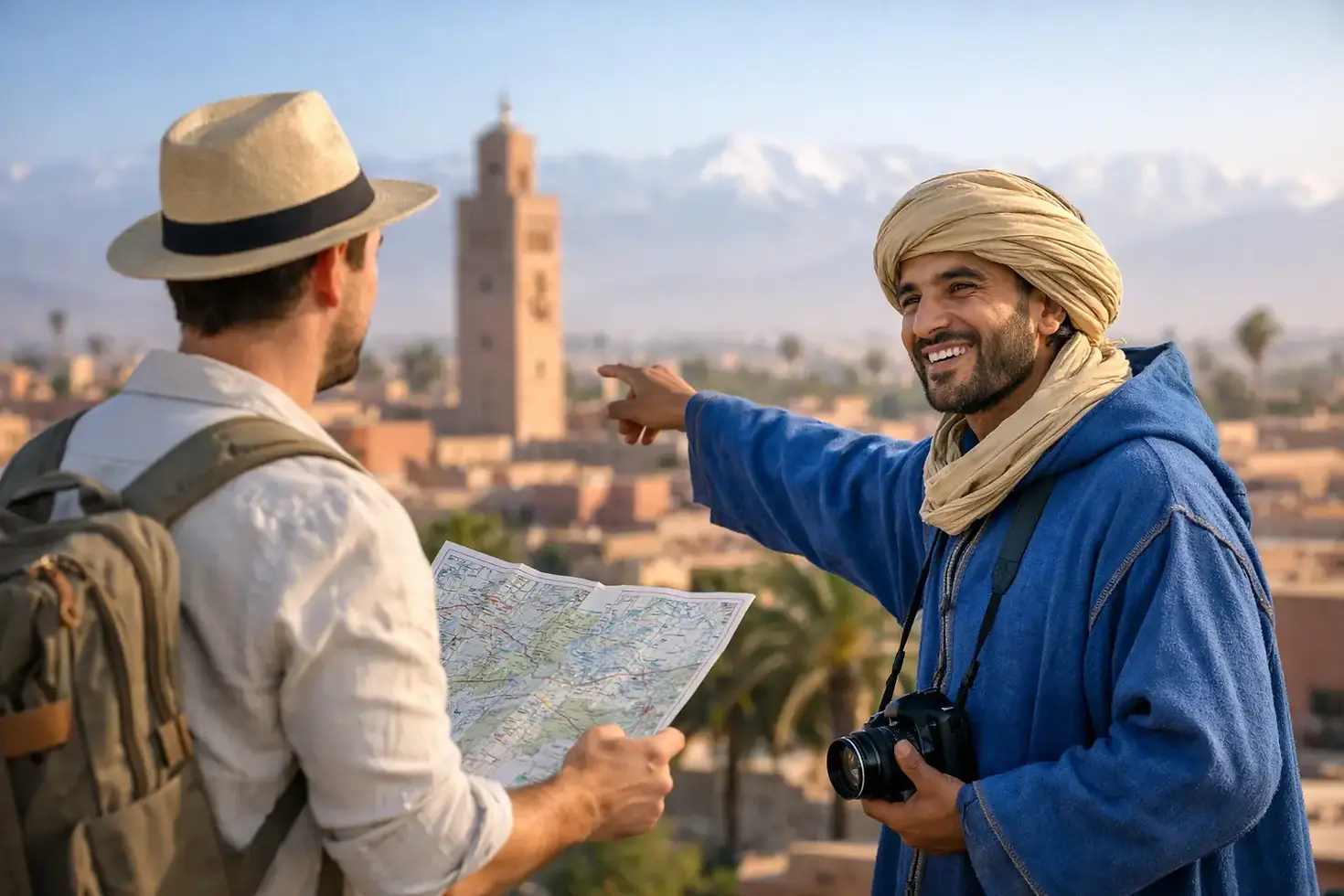
How to Choose a Morocco Guide
- Jul 7
- 6 min read
Some Morocco trips look simple on a map, then become complicated the moment you start connecting cities, desert camps, mountain roads, riads, drivers, and local experiences. That is usually when travelers start asking how to choose Morocco guide support that actually fits the trip they want, not just the cheapest option or the first name that appears online.
The right guide can shape the entire experience. In Morocco, that matters more than many first-time visitors expect. A strong guide does more than explain landmarks. They help pace the trip well, smooth over logistics, read the room, adjust to your energy, and bring context to places that can otherwise feel rushed or surface-level. The wrong guide, on the other hand, can leave you stuck in a rigid schedule, unclear communication, or a version of the country that feels overly commercial.
Why choosing a Morocco guide matters
Morocco is rewarding, but it is not a plug-and-play destination. Distances are longer than they appear, travel styles vary sharply between regions, and what works in Marrakech may not work in the Sahara or the High Atlas. A guide who is excellent for a medina walking tour may not be the right fit for a multi-day private route with mountain stops and desert overnights.
That is why the first question is not, "Who is the best guide in Morocco?" It is, "What kind of support does this trip actually need?" For some travelers, that means a private driver-guide for a full itinerary. For others, it means a local city guide in Fes or Marrakech, plus separate logistical support for transfers and desert touring. If you are traveling as a family, with older parents, or with a small group of friends, ease and coordination often matter just as much as historical knowledge.
How to choose a Morocco guide for your trip style
Start with the shape of your trip. A couple planning a luxury honeymoon, a family combining cities with the Sahara, and a friend group booking a 3-day desert tour do not need the same guide profile.
If your trip includes multiple destinations, especially Marrakech, Ait Ben Haddou, Dades Valley, Merzouga, Fes, or Chefchaouen, you will usually benefit more from a company or guide team that can coordinate the full route rather than a single freelance guide covering isolated segments. Morocco rewards good sequencing. A guide service that understands driving times, hotel standards, scenic stops, and pacing can save you from losing a full day to poor routing.
If your priority is trekking, choose someone with direct mountain experience, not just general tourism knowledge. Atlas routes, refuge logistics, altitude pacing, and mule support require a different kind of expertise. The same is true in the Sahara. Desert travel sounds straightforward, but camp quality, vehicle standards, timing, dune access, and local camp partnerships can vary a lot.
In practical terms, the best guide is often not the most charismatic seller. It is the one whose experience clearly matches your exact route and travel style.
Know the difference between guide types
This is where many travelers get tripped up. In Morocco, you may be dealing with a city guide, a driver, a driver-guide, a mountain guide, or a tour operator coordinating several people behind the scenes.
A city guide is usually best for half-day or full-day exploration in places like Marrakech or Fes, where local context and navigation matter. A driver is essential for long intercity travel but may not provide in-depth guiding. A driver-guide can be a strong option for private touring if you want continuity across the trip. A mountain guide is specialized and should be chosen for trekking credentials, not general sightseeing ability.
If you want one point of contact and less friction, a well-run local operator is often the strongest choice. That setup gives you coordinated transport, lodging, timing, and regional expertise without forcing one person to do every job.
What to look for when you choose a Morocco guide
Experience matters, but relevant experience matters more. Ask how often they run your exact route, not just how long they have worked in tourism. A guide who regularly handles Marrakech to Sahara circuits or Toubkal ascents is likely to anticipate the small details that affect comfort and timing.
Communication is another major test. Before booking, notice how clearly they answer questions. Do they explain what is included, how long driving days will feel, what type of accommodations to expect, and where flexibility exists? If communication is vague before the trip, it rarely becomes sharper once you arrive.
Good guides also ask smart questions. They should want to know your pace, comfort level, group size, accommodation preferences, and whether you care more about scenery, culture, walking, photography, or downtime. That is usually a sign they are trying to fit the trip to you rather than pushing a one-size-fits-all program.
Professionalism shows up in smaller ways too. Are pickup points clear? Are hotel categories explained honestly? Is the desert camp described specifically, or just sold with broad promises? In Morocco, details are not decorative. They are the difference between smooth travel and avoidable stress.
Reviews help, but patterns matter more than praise
Online reviews can be useful, but a long list of generic compliments is less helpful than a few specific signals. Look for comments about pacing, flexibility, driving quality, family-friendliness, local knowledge, and how problems were handled. Those details tell you what the experience feels like in real life.
It also helps to watch for consistency. If several travelers mention that a guide was calm, organized, and responsive, that is meaningful. If the praise is all about friendliness but says little about logistics or planning, you may still want more clarity before booking.
Questions worth asking before you book
A good booking process should feel transparent, not rushed. You do not need to interrogate anyone, but you should ask enough to understand what you are buying.
Ask who will actually guide or drive your trip. Sometimes the person responding to your inquiry is not the person on the ground. That is not automatically a problem, but you should know the structure.
Ask what is private and what is shared. Some travelers assume the entire route is private, then discover a shared desert camp setup or mixed transport segment. For some budgets that trade-off is fine. For others, it changes the whole experience.
Ask how flexible the itinerary is once the trip begins. Morocco rewards a little adaptability. You may want extra time in a kasbah, a slower lunch in the mountains, or fewer shopping stops in a city. A solid guide service can usually adjust the rhythm within reason.
Ask what kind of vehicle is used for longer routes, especially if you are covering serious ground. Comfort matters more than people think on Morocco road trips.
Red flags to take seriously
If pricing is unusually low for a private trip, there is usually a reason. It may mean weaker vehicles, rushed driving days, lower camp standards, or aggressive stop patterns designed around commissions rather than your experience.
Another red flag is overpromising. If every itinerary is described as luxury, authentic, adventurous, relaxing, and fully customizable all at once, press for specifics. Morocco offers all of those things, but not always in equal measure on the same trip.
Be cautious if someone avoids direct answers about timing, accommodations, or who will accompany you. Transparency is part of good service. You should not feel like you are piecing together basic facts from scattered messages.
It depends on budget, but not in the way people think
Travelers often focus on the day rate first. That matters, but value in Morocco is usually tied to coordination quality, not just the headline price. A slightly higher-cost guide service may deliver better routes, stronger lodging choices, safer driving, more realistic pacing, and fewer wasted hours. Over a one-week or ten-day trip, that difference is significant.
That said, the most expensive option is not automatically the best fit. Some travelers want polished boutique properties and a private driver throughout. Others care more about hiking, local guesthouses, and a smart route with fewer extras. The goal is not to buy the highest tier. It is to match the service level to the trip you actually want.
For travelers who want cultural depth without handling every moving part themselves, working with a local specialist can offer the best balance. Companies like Nomadik Morocco are built around that middle ground - authentic, well-coordinated travel that still feels personal.
The best choice feels clear, not flashy
When you find the right guide or guide service, the sales process usually feels calm. The route makes sense. The trade-offs are explained. Your questions are answered directly. You can picture how the trip will work day by day.
That clarity is worth a lot in Morocco, where great travel depends on timing, local relationships, and thoughtful planning as much as it does on beautiful places. Choose the guide who makes the country feel more accessible before you even arrive, and your trip will usually start on the right foot.


Comments