
.png)

.png)
.png)
.png)


Luxury Morocco Itinerary Planner for 10 Days
- 39 minutes ago
- 6 min read
A well-designed Morocco trip is not measured by how many cities fit on the map. It is measured by the moment you arrive at a quiet riad after a guided walk through Fez, watch the light change over the Atlas foothills, or sit beside desert dunes without needing to think about the drive ahead. A luxury Morocco itinerary planner brings those moments together with the practical details that make them feel easy: the right route, private transport, carefully chosen stays, and local hosts who know when to add depth and when to leave space.
For most travelers, Morocco is best experienced as a journey rather than a checklist. The distances are real, landscapes change quickly, and each stop has its own rhythm. A private itinerary gives you the comfort to travel well while keeping the country’s character at the center.
What Luxury Means in Morocco
Luxury in Morocco is not limited to grand hotels or a packed schedule of private activities. It is the confidence that your driver knows the mountain roads, your room is in the right part of town, and your day has been paced around what you actually want to experience.
In Marrakech, that may mean a beautifully restored riad with a quiet courtyard, a private guide who can lead you through the medina at the right pace, and dinner reservations that avoid the most crowded tourist routes. In the Sahara, it may mean a comfortable desert camp, an unhurried camel ride near sunset, and a 4x4 transfer that gets you into the dunes without sacrificing comfort.
The best plans balance polished service with places that still feel rooted in their setting. A high-end hotel can be the right choice in one destination, while a small lodge overlooking a valley may offer the more memorable stay elsewhere. It depends on your travel style, group size, and how much privacy you want at each stop.
Start With a Route, Not a Wish List
Morocco rewards travelers who allow enough time between its major regions. Marrakech, the Atlas Mountains, the desert, Fez, and the coast all deserve attention, but trying to cover them in five or six days often turns a special trip into a series of long transfers.
For a first luxury journey, seven to ten nights is usually a strong range. It allows time for Marrakech, the Atlas region, the Sahara, and either Fez or the coast. With 12 to 14 nights, you can slow the route further, add a second night in the desert, spend time in the Skoura oasis, or include Essaouira for a relaxed finish by the Atlantic.
A typical 10-day route might begin with two or three nights in Marrakech, followed by one or two nights in the Atlas Mountains. From there, travel through the southern valleys toward the dunes near Merzouga. After a night or two in the Sahara, continue north through changing scenery toward Fez, with a well-placed overnight stop to break up the drive.
This route works because it builds gradually. Marrakech offers energy and color. The mountains provide fresh air and open views. The desert creates stillness and scale. Fez brings a more intimate, historic urban experience. Each place feels distinct, rather than repeating the last.
Why private transport changes the experience
A private driver is often the foundation of a luxury Morocco itinerary. It is not simply about traveling in a comfortable vehicle. It gives you control over timing, stops, luggage, and pace on days when public transport or self-driving would add unnecessary stress.
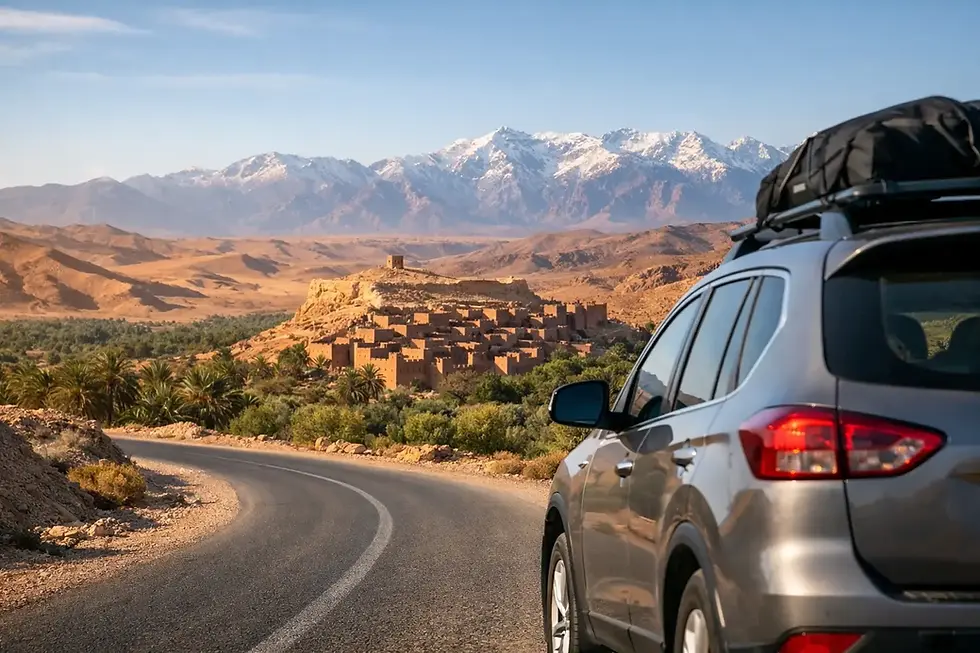
On the road from Marrakech toward the desert, a local driver can stop for a panoramic mountain view, a quiet kasbah, or a lunch that suits your preferences. You are not tied to a group timetable. Families can take breaks when needed. Couples can linger for photographs. Friend groups can adjust the day without negotiating with a bus schedule.
Not every day needs a driver from morning to night. In Marrakech and Fez, walking with a private guide is often the better way to understand the city. The point is to use the right form of support in each place.
Build in Stays That Match the Landscape
Accommodation should do more than provide a bed between sightseeing days. The right stay can become part of the trip itself.
In Marrakech and Fez, many travelers prefer intimate riads over large international hotels. A well-run riad offers a calm retreat from the streets outside, often with thoughtful design, attentive service, and a location that makes exploration simple. Larger luxury hotels can be a good fit for travelers who want resort-style facilities, more dining options, or a spacious pool after active days.
In the Atlas Mountains, look for a lodge or boutique property with views and easy access to village walks. A mountain stay should not feel like a rushed photo stop between Marrakech and the desert. One or two nights lets you experience a slower side of Morocco, with local trails, valley scenery, and meals prepared close to where the ingredients are grown.
For the Sahara, comfort comes down to details. A quality camp should have private tents, proper bedding, private bathrooms where available, reliable service, and a setting that feels removed from the busiest areas. Some travelers want a single night in the dunes as a highlight. Others prefer two nights, especially if they want time for a 4x4 excursion, sandboarding, a walk among the dunes, or simply a quieter morning after the camp has settled down.
Use Guides for Context, Not Constant Company
Private guides add the most value where a place has layers that are easy to miss alone. In the medinas of Marrakech and Fez, a good guide helps you move with purpose through streets that can feel confusing on a first visit. They can shape the day around architecture, food, artisan workshops, gardens, or local history, rather than following a fixed script.
The same principle applies in the mountains. A local trekking guide can turn a scenic walk into a meaningful introduction to the area, while matching the route to your fitness level. This matters for families with younger travelers, active couples, and groups with different abilities.
Still, a luxury itinerary should leave room to wander independently. Plan a guided morning, then keep an afternoon free for the hammam, a rooftop drink, shopping, or a long lunch. Travelers often remember these unplanned hours as clearly as the headline experiences.
Plan the Desert With Realistic Expectations
The Sahara is a major reason people come to Morocco, and it is worth the journey when planned properly. It also requires clear expectations. From Marrakech, reaching the dunes usually involves a full day of driving, often with an overnight break in a southern valley for a more comfortable pace. Trying to do Marrakech to the desert and back in three days is possible, but it is fast and road-heavy.
For travelers with limited time, a three-day desert tour can work well for friends or families who are comfortable with longer drives and want the dunes as a focused highlight. For a more luxurious experience, allow four or five days from Marrakech to the desert and onward. This gives room for a night in Skoura, the Dades Valley, or another scenic stop, rather than treating the landscape as something to rush through.
The season matters too. Spring and fall are popular for comfortable daytime travel, though evenings in the desert can still be cool. Summer can be very hot, making early starts, air-conditioned transport, and the right accommodations especially important. Winter offers crisp, clear days but colder nights in both the mountains and the desert.
Questions Your Luxury Morocco Itinerary Planner Should Ask
A tailored itinerary starts with better questions than “How many days do you have?” A thoughtful planner should ask what kind of comfort matters most to you, whether you enjoy active days, how much driving feels acceptable, and whether your group prefers boutique character or full-service hotels.
It also helps to discuss arrival and departure cities early. Flying into Marrakech and departing from Fez, or the reverse, can reduce backtracking on a north-to-south route. Travelers arriving and leaving from Casablanca may need a different structure, particularly if time is short.
Dietary needs, room configurations, mobility considerations, and special occasions should be addressed before hotels and guides are confirmed. These are not minor details. They shape which properties work best and how each day should unfold.
At Nomadik Morocco, locally designed private travel means coordinating these pieces around the country itself, not forcing Morocco into a generic luxury template. The right itinerary may include a refined riad, a remote mountain lodge, a desert camp, and a private guide, but it should always feel connected by a route that makes sense.
Give Morocco enough time to surprise you. When transport, stays, and experiences are planned with care, you can spend less energy managing logistics and more time noticing the details that make the journey yours.


Comments