
.png)

.png)
.png)
.png)


Marrakech or Casablanca Base: Which Fits Your Trip?
The decision between a Marrakech or Casablanca base changes more than your hotel address. It determines how much time you spend on the road, which landscapes feel within reach, and whether your first days in Morocco begin with lively old-city energy or a calmer, coastal urban rhythm. Neither is automatically better. The right choice depends on your arrival flight, trip length, and the experiences you want to place at the center of the journey.
For most first-time travelers planning the Atlas Mountains, a Sahara journey, and time in a historic city, Marrakech is the stronger starting point. Casablanca is often the smarter choice for travelers arriving on a long-haul flight, those interested in the Atlantic coast and northern cities, or anyone who prefers to ease into the trip before heading inland.
Marrakech or Casablanca Base: The Key Difference
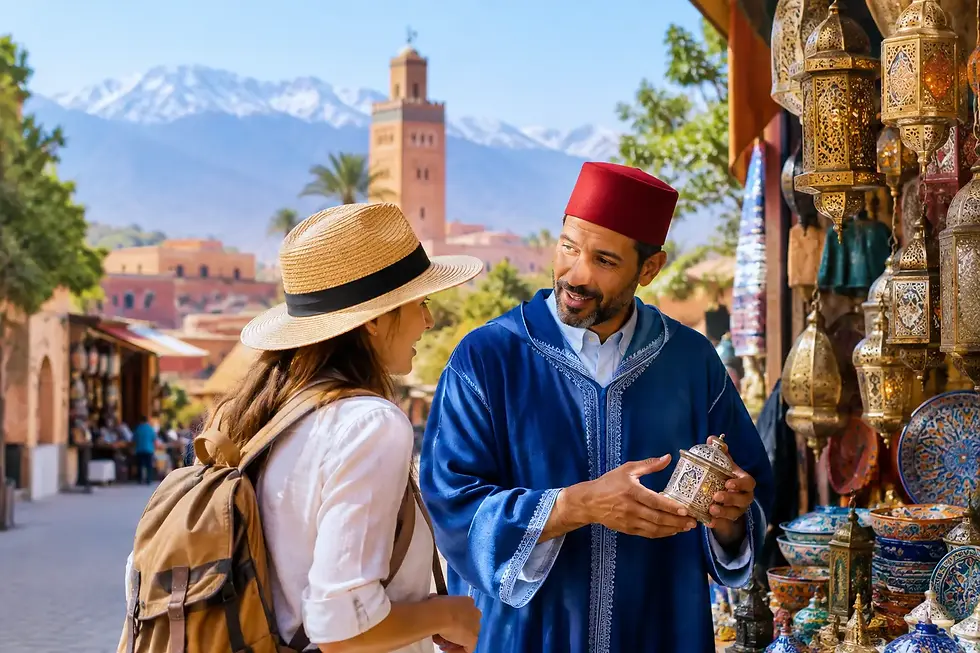
Marrakech is an experience-led base. Its appeal is immediate: maze-like lanes, artisan workshops, garden courtyards, rooftop dining, and the High Atlas rising beyond the city. It is well positioned for mountain day trips, overnight treks, and longer private routes toward the desert. A stay here feels like stepping straight into the most colorful chapters of a Morocco itinerary.
Casablanca is a practical gateway with a more contemporary pace. It is Morocco’s largest city and has the country’s busiest international airport, which can make it especially convenient for North American arrivals. Its rail connections also make onward travel to Rabat, Meknes, Fes, and Tangier straightforward. Rather than competing with Marrakech for atmosphere, Casablanca works best as a smooth arrival or departure point that keeps the wider route efficient.
The distinction matters because Morocco is larger than it can appear on a map. Driving between major regions takes time, particularly when your route crosses mountain roads or heads south toward the Sahara. Choosing the right base early prevents an itinerary from becoming a series of long transfers with too little time to enjoy the places in between.
Choose Marrakech for Mountains, Desert Routes, and City Energy
Marrakech is the natural base when the Atlas Mountains are a priority. The foothills are close enough for a well-paced day trip, while multi-day trekking routes can begin with a short transfer from the city. For active travelers, this makes it easy to combine a comfortable riad stay with time on mountain trails, village walks, or a Toubkal ascent supported by experienced local guides.
It is also the usual launch point for a classic Sahara road trip. The drive to the dunes is not short, so it is better approached as a multi-day journey rather than a day excursion. A thoughtfully planned route can include dramatic mountain passes, fortified villages, palm groves, canyon landscapes, and a night in a desert camp. Starting in Marrakech allows the route to build naturally, rather than requiring you to backtrack.
Marrakech suits travelers who want their hotel to be part of the experience. Many visitors choose a riad within or near the old city, where inner courtyards create a quiet contrast to the activity outside. You can spend a morning exploring with a private guide, rest during the warmest part of the afternoon, then head out again for dinner, a food tour, or an evening walk.
There are trade-offs. Marrakech can feel intense at first, particularly around busy market lanes and major squares. Travelers who value quiet may prefer a riad in a less crowded section of the old city, a boutique hotel in the newer districts, or a property outside the center with gardens and a pool. A private driver and local guide also make the first day far easier, especially after an overnight flight.
Best Marrakech-based trip lengths
With four or five nights, Marrakech works well with one full city day and one Atlas day trip. With seven to nine nights, it can anchor a broader route that includes the mountains and a two- or three-night desert journey. For travelers flying into Marrakech and departing from Fes or Casablanca, it is often best used as the first stop rather than a base to return to after every excursion.
Choose Casablanca for Easy Arrivals and Northern Routes
Casablanca earns its place in an itinerary through convenience. Mohammed V International Airport offers a broad range of international connections, and a private airport transfer can bring you to your hotel without the need to navigate a new city after a long flight. For families, older travelers, or groups arriving at different times, that ease can be valuable.
The city is also a sensible base for a first night before traveling onward. Instead of landing and immediately taking a long road transfer to Marrakech, you can sleep well, enjoy a relaxed dinner, and leave the following morning with a driver or by train. This approach creates a gentler start and avoids losing the first day to fatigue.
Casablanca is especially useful when your route heads north or inland toward Morocco’s imperial cities. Rabat is close by, while Meknes and Fes are accessible through a combination of rail and private transport. Travelers interested in a city-focused itinerary can begin in Casablanca, continue through these destinations, then fly home from Fes or return to Casablanca for an international departure.
The Atlantic coast also fits more naturally from Casablanca. Depending on the pace of your trip, you can continue south toward El Jadida and Essaouira, or combine coastal time with Marrakech later in the route. This is a good choice for travelers who want ocean air, seafood, and a slower final stretch after several days of inland touring.
Casablanca is not usually the best single base for the Atlas Mountains or the Sahara. Reaching either requires a substantial transfer, often through Marrakech. If those are your non-negotiable experiences, starting in Casablanca is fine, but plan to move on rather than treating the city as a day-trip hub.
Do Not Force One Base for a Multi-Region Trip
A common planning mistake is trying to use one city as a base for all of Morocco. It can sound convenient, but it usually creates long travel days and repeated routes. Morocco rewards a moving itinerary: stay where the landscape changes, then let the next destination feel genuinely different.
For example, a balanced eight-night journey might begin with two nights in Marrakech, continue into the High Atlas or along the road toward the desert, include one or two nights near the dunes, then finish in Fes or Casablanca depending on flight plans. Each overnight stop has a purpose, and the journey itself becomes part of the experience.
The same principle applies to shorter trips. If you have only three or four nights, resist the temptation to include Marrakech, the Sahara, Fes, and the coast. Pick one strong route. A Marrakech stay with the Atlas Mountains is rewarding in a short window. So is Casablanca, Rabat, and Fes for travelers arriving through Casablanca. The Sahara is best saved for a trip with enough time to enjoy the road and spend a full evening under desert skies.
Private transport changes what is realistic
Private transport is often the difference between an ambitious route and an exhausting one. A local driver can time departures around traffic, build in scenic stops, manage luggage, and choose the right place for lunch or a rest break. This is particularly useful on desert routes and in the mountains, where public transportation may not match your schedule or accommodation plan.
For small groups and families, a private vehicle also brings flexibility. You can pause for photos, adjust a departure time, or spend longer at a village market or viewpoint without worrying about a fixed group schedule. The goal is not to rush between landmarks, but to make the travel days feel considered and comfortable.
Questions That Make the Choice Clearer
Start with your flights. If your most convenient international flight arrives in Casablanca, there is no reason to avoid it. Spend the first night there if needed, then continue to Marrakech or north toward Fes. If you can fly directly into Marrakech and your trip centers on the south, mountains, and desert, landing there saves valuable time.
Next, consider the feeling you want from your first two days. Marrakech is vivid, sensory, and close to adventure. Casablanca is more spacious, businesslike, and easier to navigate as an arrival city. Some travelers love arriving directly in the heart of Marrakech; others appreciate a quieter landing before the more energetic parts of the trip begin.
Finally, look at your departure point. Open-jaw flights, arriving in one city and leaving from another, can reduce backtracking considerably. A route from Marrakech through the desert to Fes, or from Casablanca to Marrakech via the coast, often makes better use of your days than returning to where you started.
A well-designed itinerary should follow your priorities, not force every destination into one week. Whether you begin in Marrakech or Casablanca, let your base support the route ahead, and leave enough room for the unplanned moments that make Morocco feel personal.


Comments