


What Sahara Glamping in Morocco Is Really Like
A good Sahara glamping stay begins where the paved road ends. The air cools, the horizon opens, and the pace changes completely. In Morocco, Sahara glamping is not simply spending a night in a tent. It is a carefully planned desert experience that brings together remote landscapes, comfortable sleeping, local hospitality, and the kind of quiet that is difficult to find anywhere else.
For many travelers, the Sahara is the defining moment of a Morocco itinerary. The difference between a memorable night and a frustrating one usually comes down to camp location, transfer timing, tent quality, and realistic expectations. The desert rewards good planning.
What Sahara glamping actually means
Sahara glamping combines the atmosphere of a traditional desert camp with the comforts that make an overnight stay enjoyable. Most quality camps offer private tents with proper beds, fresh linens, lighting, and a dining tent or outdoor dining area. Many include private bathrooms, while others use well-maintained shared facilities.
The best camps do not try to turn the desert into a city hotel. Instead, they focus on what belongs there: warm blankets after sunset, a relaxed dinner, lantern-lit paths, attentive hosts, and an open view of the dunes. Comfort matters, but so does a sense of place.
There is a range of standards. A more basic camp can be a good fit for travelers who prioritize a lower budget and a simple overnight experience. Luxury camps generally offer larger tents, ensuite bathrooms, elevated dining, and more privacy. Neither is automatically better. It depends on how much comfort you want after a long drive and whether the desert camp is a centerpiece of your trip or one stop among many.
The dunes make a difference
Not every desert camp offers the same setting. In southeastern Morocco, the tall, golden dunes around Erg Chebbi near Merzouga are the best-known choice for first-time visitors. Their scale is immediate and dramatic, making them particularly well suited to couples, families, and groups who want classic dune views close to camp.
Erg Chigaga, farther from the main tourism routes, feels more remote and wild. Reaching it requires more time and typically a four-wheel-drive transfer across rougher terrain. The reward is a stronger feeling of isolation and fewer camps in view. It is often the better choice for travelers with a longer itinerary who are willing to trade convenience for remoteness.
A camp described as "in the desert" may be near dunes rather than surrounded by them. That does not necessarily mean it is poor quality, but it is worth asking where the camp sits and how guests arrive. A precise answer is more useful than a broad promise of an authentic experience.
Arrival is part of the experience
Depending on the camp and season, the final approach may be by camel, four-wheel drive, or a combination of both. A camel ride can be a meaningful way to arrive at sunset, especially for travelers who want the traditional desert image. It is also slower and less comfortable than many people expect, particularly for young children, older travelers, or anyone with back concerns.
A vehicle transfer is practical, fast, and often the right choice after a full day on the road. Some itineraries include a short camel ride for the experience, followed by a drive to camp. This balance works well when comfort, timing, and accessibility matter.
A typical evening at a Morocco desert camp
A well-paced camp stay does not need a packed schedule. After arrival, there is usually time to settle into your tent, walk into the dunes, and watch the light change across the sand. Sunset is the natural highlight, and it is best enjoyed without rushing from one activity to another.
Dinner follows after dark, often in a communal tent or beneath the open sky when conditions allow. Meals are generally Moroccan in style, with vegetarian and dietary requirements arranged in advance. After dinner, some camps offer live local music around a fire. Others keep the evening deliberately quiet. Travelers who value a calmer atmosphere should ask about this before booking, especially during busier periods.
Later, the desert becomes noticeably cooler. Even when daytime temperatures are high, nights can feel cold from fall through spring. Good camps provide blankets, but warm layers are still essential. Early morning brings another reward: soft light, cool air, and dunes that look entirely different before the day warms up.
How to choose the right Sahara glamping camp
Photos are helpful, but they rarely answer the planning questions that affect your stay. Start with the basics: Is the tent private? Is there an ensuite bathroom? How far is the camp from the nearest road? Is the camp powered throughout the night? What is included in the dinner, breakfast, and transfer?
Camp size matters as well. A larger camp may have more amenities and a lively social atmosphere, which can suit friend groups. A smaller camp usually feels more personal and peaceful, though availability can be limited during popular travel dates. For couples marking an anniversary or families wanting privacy, a smaller tent count is often worth prioritizing.
Ask about the camp’s view and layout. Tents spaced close together can still be comfortable, but they offer a different experience from a camp with broad open space between accommodations. For a special occasion, it can be worth requesting a tent on the quieter edge of camp rather than simply choosing the most expensive category.
Nomadik Morocco plans desert stays around the route, travel pace, and accommodation level that suit each group, rather than treating every Sahara night as identical. That local coordination is especially valuable when combining the desert with mountain roads, historic cities, or a shorter three-day itinerary.
Timing your desert stay
Spring and fall are typically the easiest seasons for Sahara glamping. Days are pleasant, evenings are cool, and desert activities are more comfortable. Winter brings crisp, bright days and genuinely cold nights, which can be ideal for travelers who prefer cooler temperatures and do not mind packing layers.
Summer is possible, but it requires a different approach. High daytime heat can make long drives and dune walks demanding. A summer desert itinerary should prioritize early arrivals, air-conditioned transport, ample water, and a camp with dependable shade and cooling options. For some travelers, especially families with young children, shifting the desert portion to another season is the better call.
One night in the Sahara is enough to experience the landscape, dinner, stars, and sunrise. Two nights allow for a slower rhythm, more time in the dunes, and less pressure around arrival and departure. If your route permits it, an extra night is particularly worthwhile in Erg Chigaga, where the journey itself takes more time.
What to pack beyond the obvious
You do not need specialized expedition gear for a desert camp, but a few simple choices make a major difference. Bring a light day bag for your camp essentials, since large luggage may remain in the vehicle. Closed-toe shoes are useful for walking on sand after dark, and sandals work well around camp. Sunglasses, sunscreen, a hat, and a refillable water bottle belong on every desert transfer.
For evening, pack a warm layer even in warmer months. A fleece, light insulated jacket, or sweater is more useful than many travelers expect. Keep a small flashlight handy, though established camps typically light the main paths. If you are sensitive to sound, earplugs can help, as wind and camp activity carry easily across open sand.
Most importantly, arrive with flexible expectations. Wind can shift plans, clouds can soften a sunset, and the stars are not always visible. The Sahara is compelling precisely because it is not a stage set. Its mood changes by the hour.
Make the desert fit the rest of your trip
A Sahara night should support your overall Morocco itinerary, not overwhelm it. From Marrakech, a desert journey usually works best over at least three days, allowing time for scenic stops and avoiding an exhausting out-and-back drive. Travelers arriving from Fes may prefer a route that continues toward the desert before heading south or west through different landscapes.
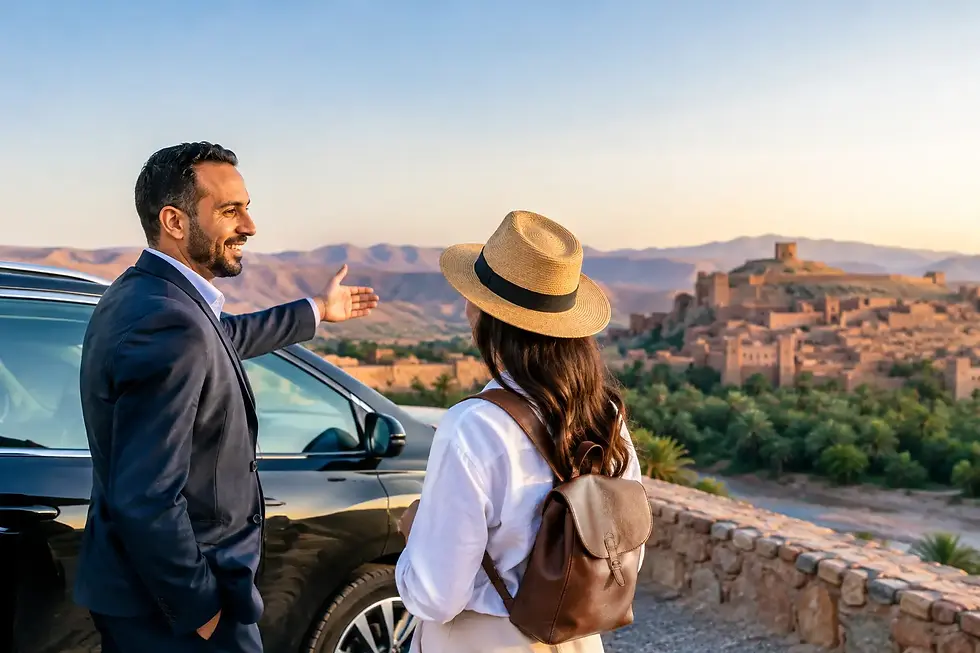
Private transport gives couples and families the flexibility to stop when they want, adjust the pace, and choose accommodation that matches the occasion. Small-group departures can be a strong value for friends and independent travelers who are comfortable with a more fixed schedule. The right format is the one that leaves room to enjoy the road as well as the destination.
When the lanterns are out, the temperature drops, and the last vehicle noise has faded, the Sahara asks very little of you. Bring layers, allow enough time, and choose a camp that respects both your comfort and the landscape around it.

Comments