
.png)

.png)
.png)
.png)


What to Wear in the Sahara Desert
By midday, the sun feels close enough to touch. A few hours later, once the light drops behind the dunes, you may be reaching for an extra layer. That swing is exactly why travelers ask what to wear in the Sahara Desert before they go. The right clothing makes the experience far more comfortable, whether you are riding camels at sunset, walking on sand near camp, or settling in for a cold desert evening.
This is not a place to dress for photos first and comfort second. The Sahara rewards practical choices. Breathable layers, full sun coverage, and a few smart accessories will do more for your trip than any trendy outfit ever will.
What to wear in the Sahara Desert by day
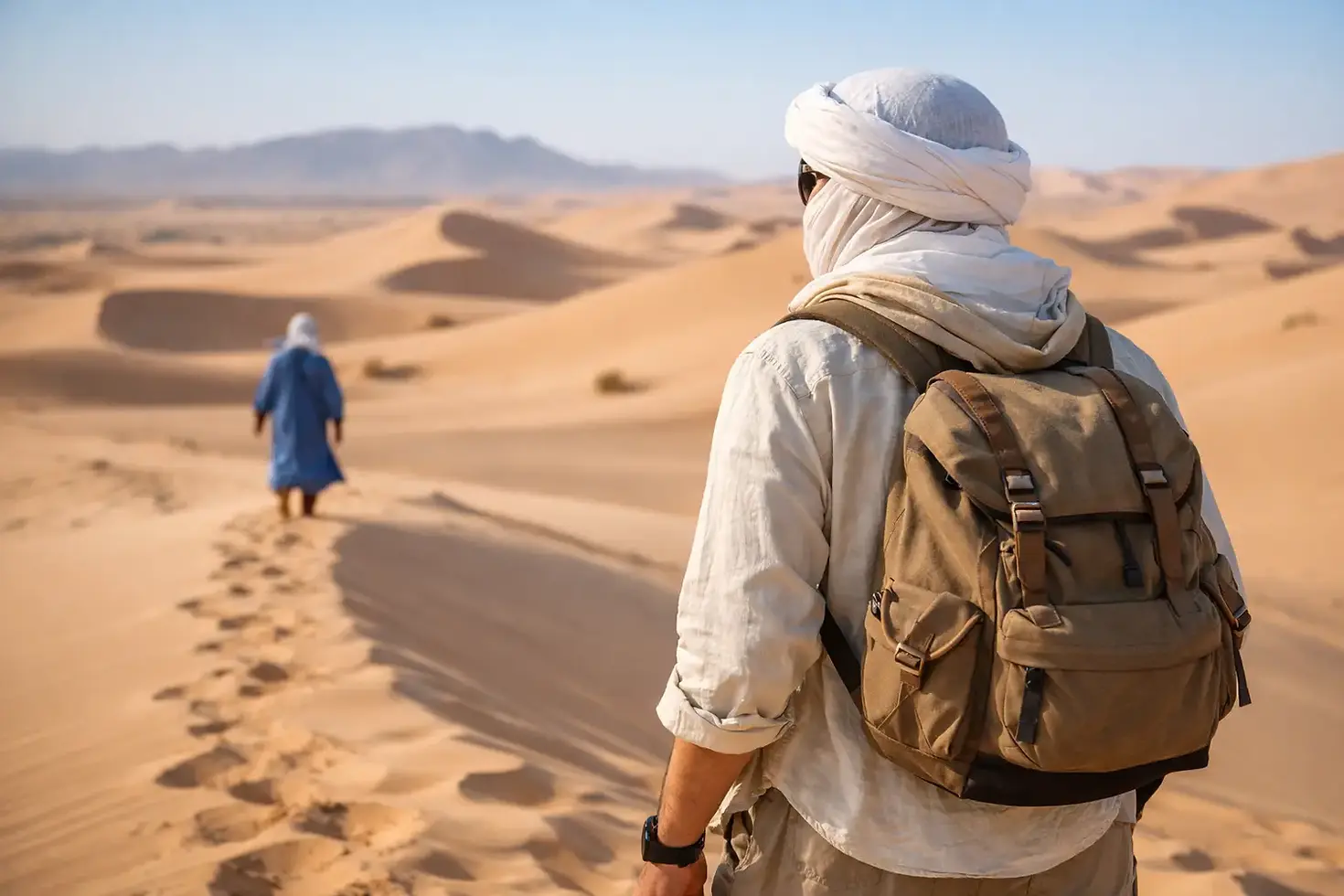
During the day, your best strategy is light coverage rather than bare skin. Many first-time visitors assume shorts and tank tops will feel coolest, but in desert conditions they often leave you hotter, more exposed, and more likely to burn. Loose, lightweight clothing works better because it creates airflow while protecting your skin from direct sun.
A long-sleeve shirt in breathable cotton or performance fabric is one of the best things you can pack. It helps with sun exposure, keeps blowing sand off your arms, and is usually more comfortable than sunscreen alone. Pair it with loose pants or hiking trousers rather than jeans. Denim tends to feel heavy, traps heat, and becomes unpleasant if you are moving around in the sand.
Color matters, but not in an overly technical way. Light shades such as beige, sand, white, or pale gray tend to feel cooler in strong sun and fit naturally with desert travel. Dark colors can still work, especially in airy fabrics, but they absorb more heat. If you are choosing specifically for comfort, lighter tones generally win.
What to wear in the Sahara Desert at night
The biggest packing mistake is planning only for heat. Desert evenings can turn cold quickly, especially from late fall through early spring. Even after a warm afternoon, the air often cools sharply once the sun goes down.
That means you should have at least one warm layer ready for camp. A fleece, lightweight down jacket, or insulated sweatshirt usually does the job. In winter, some travelers want two evening layers, especially if they tend to get cold easily. If your trip includes dinner outdoors, stargazing, or sunrise in the dunes, you will be glad you packed more than a thin top.
A scarf or shawl also becomes useful at night. It adds warmth without taking much space in your bag, and it works during the day as extra sun and sand protection.
The best fabrics for desert travel
Fabric choice matters more than fashion labels. In the Sahara, comfort comes from breathability, coverage, and how well your clothing handles dust and temperature changes.
Cotton is a solid option for many travelers because it is breathable and easy to wear. Linen can also work well in hot weather, though it wrinkles easily and may feel less practical for active movement. Technical hiking fabrics are often the most versatile because they dry quickly, stay light, and handle sweat better over a full day.
The one fabric to avoid for daytime is anything thick, stiff, or heat-trapping. Heavy denim, bulky synthetic blends, and tight athletic wear can all feel restrictive in desert conditions. The goal is simple: loose fit, light feel, and enough coverage to protect your skin.
Shoes for sand, camp, and camel rides
Footwear is where comfort and practicality need to meet. You do not need heavy boots for every desert itinerary, but you do need shoes that stay secure on uneven ground and protect your feet from hot sand.
For most Sahara trips, closed-toe sneakers or lightweight hiking shoes are a safe choice. They are comfortable for walking around camp, climbing small dunes, and getting on and off a camel. If your itinerary includes more active walking or rocky desert terrain on the way in, a hiking shoe with decent grip is better than a flat casual sneaker.
Sandals can work around camp, especially in warm months, but they are less useful during windy conditions or camel trekking because sand gets in quickly. Open footwear also leaves your feet exposed to friction and heat. Some travelers like to bring both - one closed shoe for transit and activity, one easy sandal for relaxing at camp.
Socks are easy to overlook, but they matter. Bring a few breathable pairs. In colder months, pack one warmer pair for the evening and early morning.
The accessories that make the biggest difference
In the desert, accessories are not extras. A few simple items can change the whole feel of the day.
A wide-brim hat gives excellent sun protection, especially for travelers who burn easily. If you prefer something more secure in the wind, a cap works too, but it protects less of your face and neck. Many travelers also wear a scarf, which is one of the most useful things you can bring. It can shield your neck from the sun, cover your mouth in dusty conditions, and add warmth after dark.
Sunglasses are essential, not optional. Desert light is intense, and glare off the sand can be tiring fast. Choose a pair with solid UV protection rather than a fashion pair you do not mind losing.
You should also think about your bag. A small daypack is usually enough for water, sunscreen, lip balm, sunglasses, and an extra layer. If you are doing a camel excursion into camp, keep what you need close and leave the rest in your main luggage.
Dressing for different seasons in the Sahara
There is no single answer to what to wear in the Sahara Desert because the season changes the experience.
In spring and fall, layering is usually easiest. Days are warm to hot, nights can be cool, and conditions are generally comfortable if you have a mix of breathable daytime clothing and one proper evening layer.
In summer, heat becomes the dominant factor. Very light, loose clothing with full coverage is best, and travelers need to take sun protection seriously. This is not the time for tight outfits, heavy fabrics, or unnecessary layers. A breathable long-sleeve shirt and light pants will often feel better than less clothing.
In winter, daytime can still feel pleasant under the sun, but mornings and nights may be genuinely cold. A jacket, warm socks, and a scarf become far more important. If you are traveling with children or anyone sensitive to cold, plan for the evening first and the daytime second.
What not to wear in the Sahara Desert
A few items consistently disappoint once travelers reach the dunes. Jeans are one of them. They are stiff, hot, and slow to dry. Very short shorts can feel uncomfortable on camel rides and leave your skin exposed to sun and friction. Thin fashion sandals often struggle in sand and offer little support.
It is also best to avoid anything overly tight or delicate. Desert travel is active, dusty, and variable. You want clothes you can sit in, walk in, and repeat without worrying about them all day.
If you are choosing between stylish and practical, lean practical. The Sahara is visually striking on its own. You do not need complicated outfits to look good there.
A simple outfit formula that works
If you want to keep packing easy, think in terms of one dependable desert outfit and one evening layer setup. For day, a breathable long-sleeve shirt, loose pants, closed-toe shoes, sunglasses, and a scarf will work for most travelers. For night, add a fleece or light jacket and warmer socks.
That formula suits most classic Morocco desert itineraries, especially the trips that combine road travel, a camel ride, and an overnight camp. If your route is more active or includes extra walking, lean more toward hiking fabrics and supportive shoes. If comfort is your priority, choose soft layers you can wear for long stretches in transit.
The best desert clothing does not call attention to itself. It simply lets you enjoy the dunes, the silence, the changing light, and the evening around camp without feeling too hot, too cold, or underprepared. If you pack for sun, wind, and a sharp drop in temperature after sunset, you will be in good shape for the Sahara.


Comments