
.png)

.png)
.png)
.png)


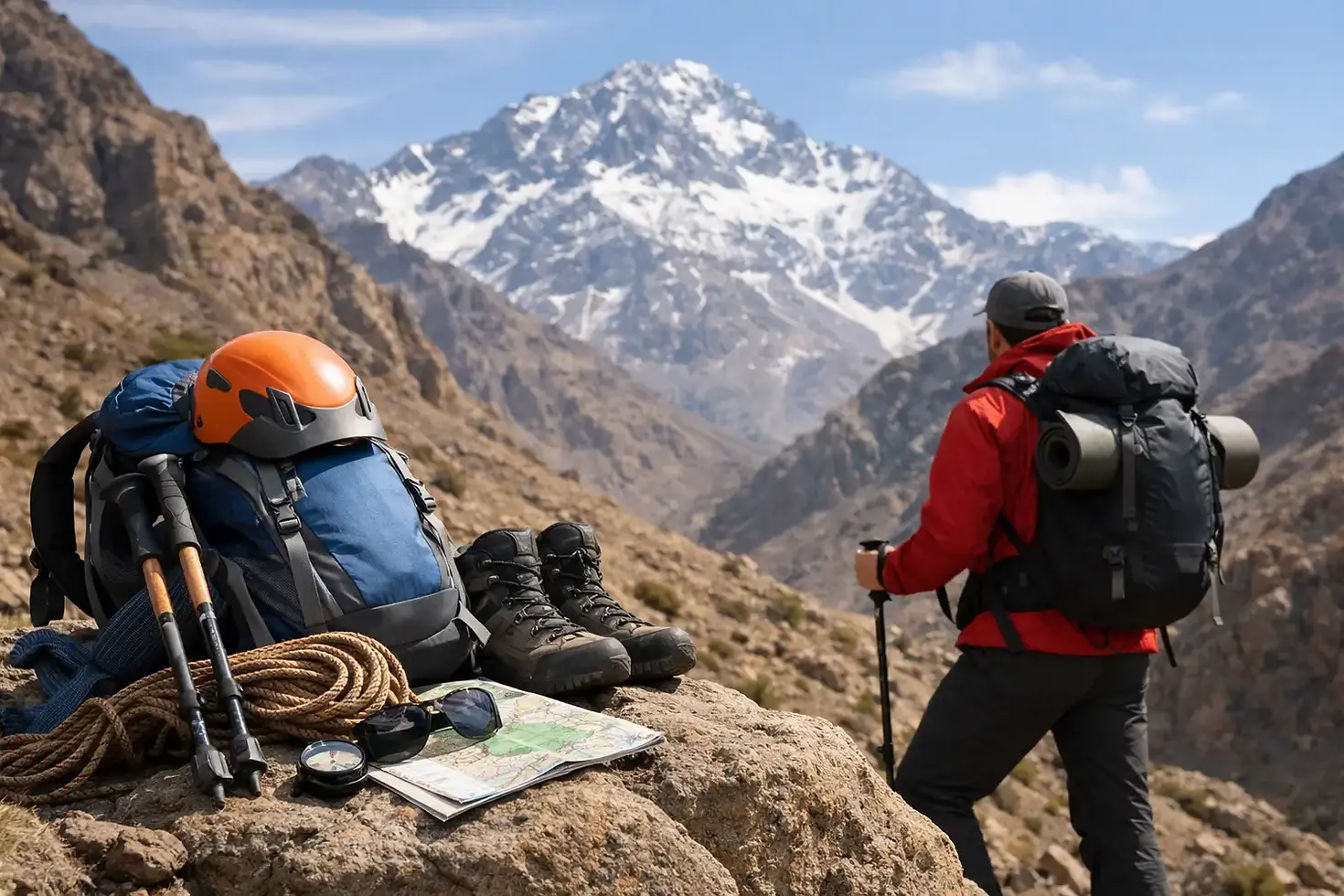
Toubkal Trek Preparation for a Safer Ascent
Mount Toubkal is not a technical climbing objective in typical summer conditions, but that does not make it a casual hike. Good Toubkal trek preparation is what turns a demanding high-altitude day into an experience you can enjoy: wide Atlas views at dawn, a well-earned pause at the summit, and a safe return to the valley.
At 13,671 feet (4,167 meters), Toubkal is the highest peak in North Africa. Most ascents begin in Imlil, a mountain village around 90 minutes from Marrakech, and follow established trails to a high mountain refuge before summit day. The route is straightforward when conditions are favorable, yet elevation, loose ground, weather changes, and the length of the final day deserve real respect.
Start With the Right Toubkal Itinerary
For most travelers, a three-day trek is the most comfortable format. It gives you time to travel from Marrakech to Imlil, begin walking at a measured pace, spend a night at the refuge, summit early the following morning, and descend without rushing every stage. A two-day itinerary is possible for fit hikers, but it compresses the ascent and descent into a harder schedule.
The best choice depends on your hiking background, the season, and how the trek fits into the rest of your Morocco trip. If you have just arrived after a long international flight, build in a night in Marrakech or Imlil before beginning. Travelers combining Toubkal with city touring or a Sahara journey often appreciate a recovery day afterward as well.
A private trek offers the most flexibility. Your guide can adjust pacing, meal timing, and stops around your group, which is especially useful for families, couples, and friends with different fitness levels. Small-group departures can be a good fit for independent travelers who are comfortable following a shared pace.
Build Fitness for the Descent, Not Just the Summit
You do not need mountaineering experience for a summer Toubkal ascent, but you should arrive able to walk for several hours on uneven terrain. The stronger your base fitness, the more room you have to slow down, take photographs, and respond sensibly if altitude affects you.
Start training six to eight weeks before departure if possible. Regular uphill walking is the most relevant preparation. Use local hills, stairs, a treadmill on an incline, or a stair machine. Gradually work toward walks of four to six hours, ideally with a light daypack and the boots you plan to wear.
Strength work helps, particularly for knees and legs on the long descent. Squats, lunges, step-ups, calf raises, and core exercises are practical additions two or three times each week. You do not need an extreme program. Consistency matters more than intensity, and recovery days reduce the chance of arriving with an avoidable strain.
Downhill confidence is often the bigger test. Trekking poles reduce pressure on knees and improve balance on loose sections. Practice using them before Morocco rather than packing them for the first time at the airport.
Understand Altitude Before You Go
Altitude is the variable no training plan can fully predict. A very fit traveler can feel unwell at 10,000 feet, while someone with modest hiking experience may adapt without difficulty. The key is to ascend gradually, hydrate well, eat regularly, and be honest with your guide about how you feel.
Mild headache, tiredness, and reduced appetite can occur as you gain elevation. Slow down and let your guide know early. Symptoms that worsen, severe headache, dizziness, confusion, breathlessness while resting, or persistent vomiting are reasons to stop ascending and descend with guidance. Reaching the summit is never worth gambling with your health.
Avoid treating the trek like a test of toughness. Alcohol the night before hiking, poor sleep, dehydration, and trying to race uphill all make the experience harder. Drink steadily throughout the day, but do not force excessive amounts of water. Your guide will help set an appropriate pace and monitor the group.
Toubkal Trek Preparation: Pack for Changing Conditions
Atlas Mountain weather can feel surprisingly cold, even when Marrakech is warm and sunny. The refuge is high in the mountains, and summit starts are usually before sunrise. Layering is more useful than bringing one heavy item that only works in a narrow range of conditions.
Your guided trek may include mule support for larger bags, but keep essential items in your daypack. That includes water, snacks, a warm layer, rain protection, sun protection, personal medication, and your camera or phone. A daypack of roughly 20 to 30 liters is usually sufficient.
For footwear, choose broken-in hiking boots with ankle support and a dependable sole. Blisters can turn a manageable trail into a miserable one, so wear the socks you have trained in and bring a spare pair. New boots, fashionable sneakers, and shoes with worn-out tread are poor choices for rocky terrain.
Pack these key items for a standard trek:
Moisture-wicking base layers, a fleece or insulated jacket, and a waterproof outer shell
Hiking pants, warm hat, gloves, and a buff or neck gaiter for the early summit start
Sunglasses, sunscreen, lip balm, and a refillable water bottle or hydration system
Trekking poles, headlamp with fresh batteries, and a small personal first-aid kit
Comfortable refuge clothes, earplugs, and a lightweight sleeping liner if preferred
In colder months, the equipment list changes. Snow and ice can remain high on the mountain, and winter ascents require proper technical gear, typically including crampons and an ice axe, along with a guide experienced in winter conditions. Do not assume summer equipment is enough outside the main warm-weather trekking period.
Choose Your Season With Care
Late spring and early fall are popular for good reason. Days are often pleasant for walking, while temperatures at the refuge and summit remain cold. Summer can offer stable weather and clear trails, but midday heat lower in the valley calls for early starts and careful hydration.
Winter transforms the trek. Snow, ice, shorter daylight hours, and colder temperatures raise the difficulty considerably. It can be an excellent adventure for experienced, properly equipped hikers, but it is not simply the same trip with an extra jacket. Conditions should shape the route, gear, and guide plan.
Weather can shift in any season. A clear forecast in Marrakech does not guarantee calm conditions above the refuge. Build flexibility into your Morocco itinerary when possible, particularly if Toubkal is a priority. A local operator can assess conditions close to departure and make sensible adjustments.
Know What a Local Guide Adds
A qualified local guide is not just there to point out the trail. They set a sustainable pace, read weather and ground conditions, coordinate refuge arrangements and mule support, and make decisions if a member of the group needs to descend. That local knowledge makes the trip calmer and better organized from Imlil onward.
For travelers arranging a private Morocco itinerary, it also removes several practical complications. Transport between Marrakech and Imlil, mountain meals, overnight refuge planning, luggage support, and return timing all need to work together. Nomadik Morocco can tailor these details around your group, preferred comfort level, and wider travel plans.
Before booking, ask what is included and what remains your responsibility. Confirm the trek length, guide arrangement, refuge accommodation, meals, transfers, mule support, rental equipment availability, and the plan for poor weather. Clear expectations make packing and budgeting much easier.
Prepare for the Refuge Experience
Mountain refuges are practical, communal places designed to support trekkers, not boutique hotels. Expect shared sleeping areas, simple but nourishing meals, limited privacy, and basic washing facilities. The atmosphere is often one of the memorable parts of the climb: hikers comparing routes, warming up over tea, and preparing packs for the early start.
Bring earplugs, a small toiletry kit, and realistic expectations. Keep valuables and next-day essentials organized before bed, because the summit departure happens in darkness. Charge electronics when facilities allow, but carry a power bank rather than relying on outlets.
Eat dinner even if altitude has reduced your appetite, then rest. The summit view is better enjoyed when you have slept, hydrated, and prepared your layers the night before.
Summit Day: Pace Is the Strategy
Summit day commonly begins before dawn so the group can climb in cooler conditions and return before afternoon weather becomes a concern. The trail steepens above the refuge and can be loose underfoot. Short, steady steps are more effective than pushing hard, stopping often, and exhausting yourself early.
Stay close enough to hear your guide, especially in low light or changing weather. Add or remove layers before you become chilled or overheated. At the summit, temperatures and wind can make a long stop unpleasant, so take in the views, enjoy the moment, and follow your guide’s timing for the descent.
The mountain rewards preparation, not speed. Arrive trained, pack for cold and sun, allow time to acclimatize, and choose experienced local support. Then Toubkal can be the kind of Atlas experience that stays with you long after your boots are clean again.


Comments